For people in Australia who rely on government help, every dollar counts. Someone can use an extra $1,500 to pay their rent, bills, or other basic needs.
But after the new welfare rules go into effect in 2026, things will be different. Some people will benefit, but others may have their payments cut or even stopped.
What Big Changes Are Coming in 2026?
Through Centrelink and Services Australia, the government has made a number of changes:
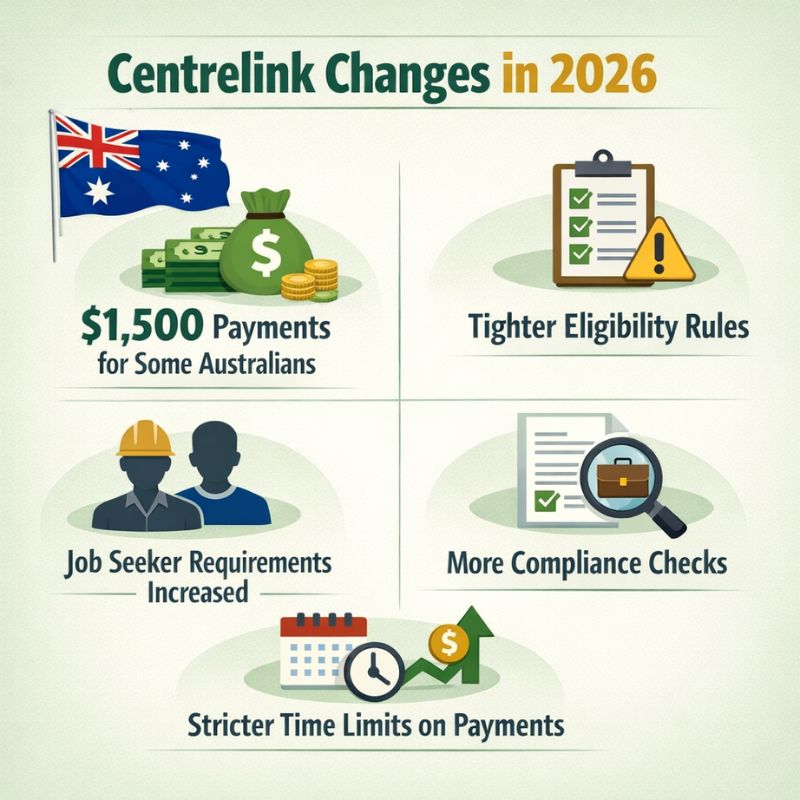
- One-time help of up to $1,500 for people who qualify
- JobSeeker recipients must follow stricter rules.
- Limits on income and assets have changed.
- More help with rent for some groups
- More strict reporting for people whose income changes often
The main goal of these changes is to give specific help and stop people from abusing the system.

Who Will Get the $1,500 Extra?
Not everyone will get this payment; only certain groups that meet the requirements will get it:
- JobSeeker recipients who are following the rules for a long time
- Age Pensioners with few assets
- People who get Carer Payment
- Some families with low incomes (Family Tax Benefit Part A)
Important: This will be a lump sum payment that goes straight into accounts, and you don’t have to apply for it separately.
Who Could Lose Payments?
Some people are at greater risk now that the new rules are in place:
- JobSeeker recipients who don’t do their part of the deal
- People who go over income limits
- Households with income that isn’t reported or is irregular
- Part-time or casual workers whose pay changes from week to week
If you miss a required job interview or training session:
Payments may be put on hold for a short time, and future payments may also be affected.
Understanding the Effects in Real Life
On one side:
Families with low incomes will get help with their money.
On the other hand:
People who work part-time or on an irregular basis may have more stress when it comes to following the rules.

These changes are making things better and worse at the same time.
Table of Payment Effects
| Recipient Type | Change in 2026 | Possible Outcome |
|---|---|---|
| Age Pensioner (few assets) | Lump sum help: up to $1,500 more | Risk of lowering payments |
| JobSeeker (compliant) | Lump sum help: up to $1,500 more | Risk of payment suspension |
| JobSeeker (not following the rules) | Strict rules | Risk of payment suspension |
| Person who gets the Family Tax Benefit | Targeted benefit: short-term help with money | Risk of lowering payments |
| Part-time worker (income that changes) | Strict rules for reporting | Risk of lowering payments |
What made these changes happen?
The government says:
- We need to deal with the rising cost of living.
- The amount of money spent on welfare is already high.
- We need to stop people from abusing the system.
- People should be motivated to join the workforce.
Policy experts say:
It’s hard to keep things in balance because you have to give support while also making sure that people are held accountable.
What should you do now?
If you get money from Centrelink, do the following:
- Look at your myGov account often
- Make sure your income reports are correct.
- Follow JobSeeker’s rules exactly
- Check the new limits on income and assets
- If your payments change, get financial advice.
Understanding the Economic Background in Australia:
- There aren’t many people who are unemployed.
- But there is still a problem with underemployment.
- People who work part-time don’t have a steady income.
- Costs for rent and utilities are still high.
So:
The $1,500 payment is only for short-term help, not a long-term fix.
Final Summary
Changes in 2026 will have two effects:
- Some people will get more money.
- More rules and risks for some people
Whether you gain or lose will depend on:
Income level for eligibility and patterns of compliance behaviour.